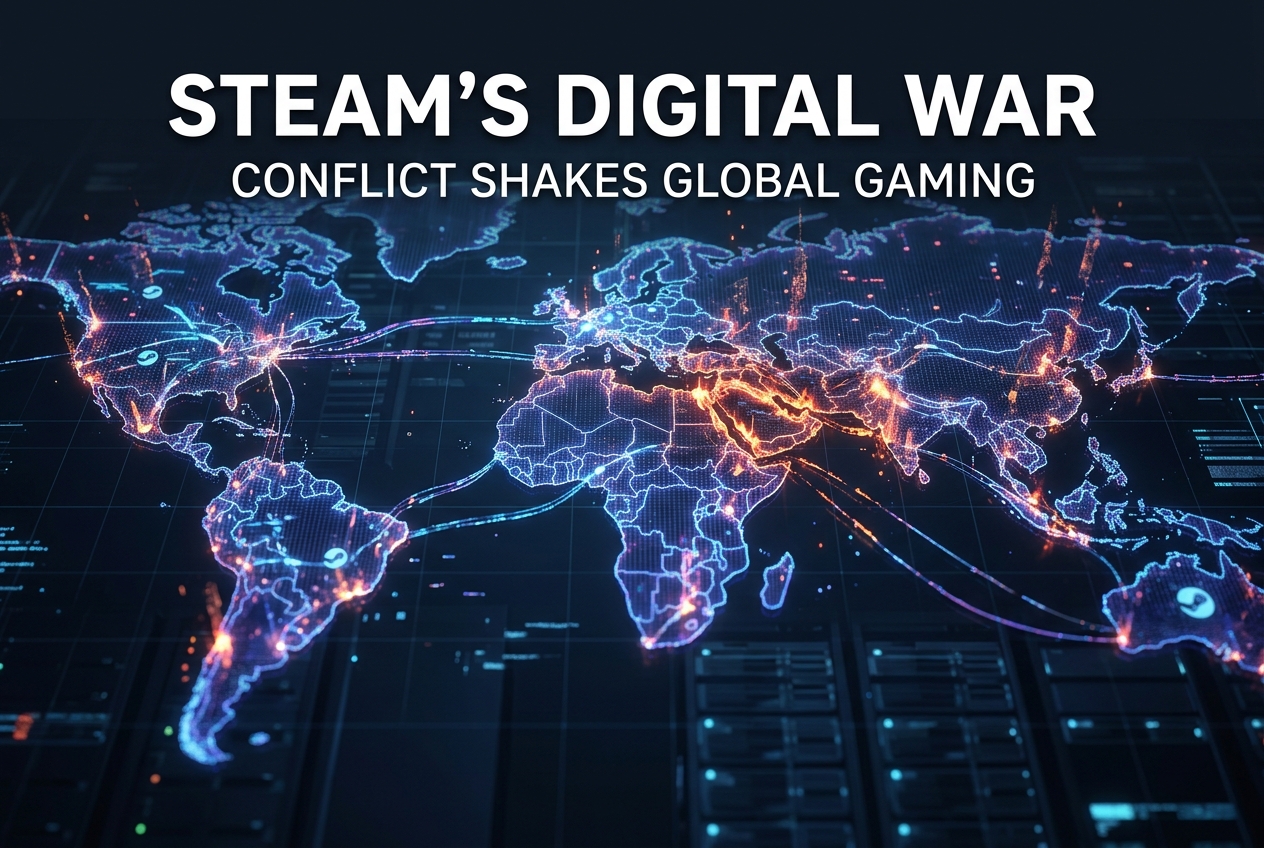
The Israel-US-Iran conflict that escalated in early 2026 is sending shockwaves through digital infrastructure worldwide, with Steam and major gaming platforms feeling the pressure through cyberattacks, server disruptions, and rising operational costs.
The armed conflict between Israel, the United States, and Iran that escalated on 28 February 2026 is not staying on the battlefield. It is spilling into the digital world, disrupting internet infrastructure, triggering massive cyberattacks, and putting pressure on platforms like Steam that billions of players depend on every day.
What Happened and Why It Matters for Gamers
On 28 February 2026, Israel and the United States launched coordinated airstrikes on Iranian military, government, and nuclear-related infrastructure under the codenames Operation Roaring Lion and Operation Epic Fury. What made this conflict unusually significant for the digital world was the simultaneous cyber dimension. Israel launched what has been described as the largest cyberattack in history against Iran, collapsing the country’s internet connectivity to roughly four percent of normal levels. Government services, official media outlets, and security communications were knocked offline across Tehran, Isfahan, and other major cities. For gaming platforms with servers or users in the region, that kind of infrastructure disruption creates direct and immediate consequences.
How Steam Is Caught in the Crossfire
Steam had already seen notable access disruptions before the February 2026 escalation. During a separate incident on 3 June 2025, players worldwide reported connection failures, timeout errors, and sudden logouts from the platform, with no immediate official explanation from Valve. When the Middle East conflict intensified in late February and into March 2026, user reports of similar disruptions surfaced again. While Valve has not issued a direct statement linking the outages to regional conflict, cybersecurity analysts note that DDoS attacks, hacktivist campaigns, and infrastructure strain increase significantly during active geopolitical escalations, and gaming platforms are among the most exposed targets due to their global scale and always-online architecture.
The Cyber Threat Picture: What the Data Shows
Between 28 February and 1 March 2026 alone, cybersecurity firm CloudSek tracked more than 150 hacktivist incidents tied directly to the escalation. These attacks targeted government systems, financial institutions, aviation infrastructure, and telecom providers across the region, with spillover risks identified for IT, cloud, and telecom providers globally. The specific threats relevant to gaming platforms include:
- DDoS campaigns: Large-scale denial-of-service attacks against online services intensified during the conflict period, consistent with patterns seen during every major geopolitical flashpoint since 2022.
- Credential theft and phishing: Iranian-linked advanced persistent threat groups including APT33 and APT35 continued targeting users of digital platforms through spoofed login portals and malicious attachments, with gaming account credentials being a known secondary target in such campaigns.
- Infrastructure strain on cloud providers: Hyperscalers and managed service providers serving Middle Eastern workloads reported elevated risk around identity systems and administrative control planes, which indirectly affects platforms using shared cloud infrastructure.
- Energy-driven cost increases: Rising energy costs linked to Middle East instability directly increase the operating expenses of data centers and cloud services, putting smaller platform operators under financial pressure.
Iranian Gamers Effectively Disconnected
The most severe gaming-specific impact fell on players inside Iran. With internet connectivity dropping to around four percent of normal levels following the strikes and the retaliatory cyber campaign, access to Steam, major multiplayer titles, and any internationally hosted platform became functionally impossible. Government digital portals, local apps, and gaming servers across Tehran, Isfahan, and Shiraz suffered extended outages. For Iranian players, this was not just a disruption to entertainment but a complete severance from global gaming communities, competitive scenes, and digital game libraries.
The Middle East Gaming Economy Under Pressure
The conflict is also casting a shadow over the broader regional gaming economy. Saudi Arabia’s plan to invest 38 billion dollars in the global video games industry as part of its Vision 2030 strategy was already drawing global attention, but the ongoing war has introduced serious uncertainty. Brian Ward, CEO of Savvy Games Group, said publicly that the escalating tensions would likely alter how business leaders and international investors perceive the region’s stability. According to Niko Partners, the Middle East and North Africa generated two billion dollars in games revenue in 2024 and was projected to reach 2.2 billion dollars in 2025, with long-term forecasts pointing to a 2.8 billion dollar opportunity by 2029. Those projections now carry a clear geopolitical risk caveat.
Compliance and Payment Friction for Global Players
The expansion of US and EU sanctions against Iran following the February 2026 strikes has tightened Know Your Customer and Anti-Money Laundering requirements for international digital platforms. This translates into practical friction for players and sellers operating across the affected regions: transaction delays, payment verification complications, and in some cases, outright inability to process payments through certain channels. Players in countries adjacent to the conflict zone have reported slower processing times on digital storefronts, including Steam’s regional payment systems.
What Players and Sellers Can Do Right Now
During periods of elevated cyber risk and infrastructure instability, a few straightforward steps significantly reduce exposure:
- Enable Steam Guard two-factor authentication if you have not already done so. Phishing campaigns targeting gaming accounts intensify during major geopolitical events.
- Check your Steam download region settings under Settings and then Downloads, and switch to a more stable region if you experience persistent connection failures.
- Review your account’s login history regularly through Steam’s Account Details page for any unrecognized sessions.
- Avoid clicking on unsolicited Steam trade offers, gift links, or account verification messages, as social engineering attacks spike during conflict periods.
- Monitor Steam’s official status page and social channels for service announcements rather than relying on third-party sources during outage events.
Things Players Are Asking About This
Is Steam actually down because of the Middle East conflict?
Steam’s outages during this period are not publicly confirmed by Valve as conflict-related, but the broader cyber threat environment created by the Israel-US-Iran war has raised risk levels for all major digital platforms. Valve distributes its server infrastructure globally, which provides resilience, but no platform is completely immune to the kind of DDoS and infrastructure pressure generated by large-scale geopolitical escalations.
Are digital game purchases safe right now?
Purchases made directly through Steam’s official storefront continue to process through Valve’s global payment infrastructure and are not directly disrupted by the regional conflict. The more realistic risk is account-level: credential theft, phishing, and social engineering attacks that spike during conflict periods. Keeping two-factor authentication active and avoiding third-party code sellers who cannot be verified is the most practical protection during this period.
Will the Middle East war permanently change the gaming industry?
The immediate effects are largely temporary and regionally concentrated. The longer-term question is whether Saudi Arabia’s massive gaming investment ambitions can survive a sustained perception of regional instability. If energy costs remain elevated and sanctions continue expanding, operational pressures on mid-size platforms will grow over the coming months. The fundamental global gaming market, however, remains on a strong growth trajectory, with PC gaming revenue projected to reach 39.9 billion dollars in 2025 according to Newzoo, and Steam continuing to grow faster than the overall PC player base.
Which regions are most affected by gaming disruptions from this conflict?
Iran is the most severely affected, with near-total internet disconnection. Gulf states including Bahrain, Kuwait, Qatar, Saudi Arabia, and the UAE face elevated cyber risk as hosts of major US military infrastructure. Israel maintains a strong cybersecurity posture but faces sustained asymmetric pressure from Iranian-linked threat actors. Players in Europe and North America are experiencing indirect effects through potential cloud infrastructure strain and increased cybersecurity overhead, rather than direct access outages.