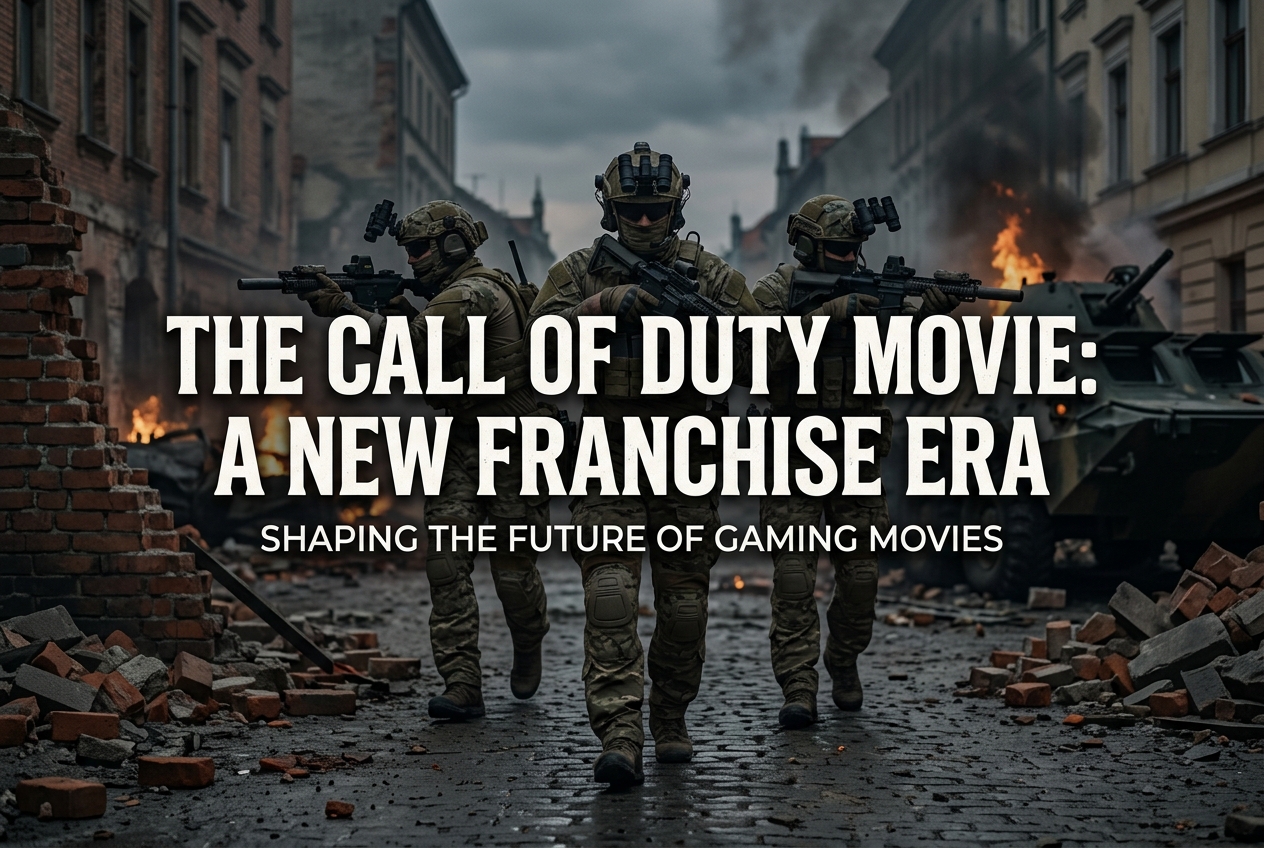
Call of Duty officially has a release date: June 30, 2028. With Peter Berg directing and Taylor Sheridan co-writing, this is the biggest video game movie announcement in years. Here’s what it means for the franchise ecosystem and the wider gaming market.
The Call of Duty movie has a confirmed release date: June 30, 2028. The announcement came through the franchise’s official social media channels, ending months of speculation about when the adaptation would arrive. Peter Berg is attached to direct, while both Berg and Taylor Sheridan are handling production and the screenplay. For a franchise that has sold over 400 million copies worldwide across more than two decades, this is one of the most significant entertainment crossover moments in gaming history.
What We Know About the Film So Far
Details remain deliberately thin at this stage. No cast has been announced. The specific time period the film will cover has not been confirmed, nor has any indication been given of which game or sub-series the screenplay draws from. Call of Duty spans an enormous timeline: World War II campaigns, Cold War covert operations, near-future combat scenarios, and the ultra-modern urban warfare of the Modern Warfare series. Each of those eras represents a different mood, audience, and storytelling style.
With the release still more than two years out as of this writing, and production apparently still in preparation, the absence of casting and story details is completely expected. Major studio action films routinely go through 18 to 30 months of production before hitting theaters, and announcing talent early in that window is common practice to build sustained buzz.
Why Peter Berg and Taylor Sheridan Are the Right Pair for This
The creative team here is not a safe Hollywood default. Peter Berg has built a specific reputation around grounded military action: Lone Survivor (2013) and Patriots Day (2016) are among the most credible modern examples of real-incident military filmmaking. He brings visual authenticity and practical intensity that abstract blockbuster directors often miss.
Taylor Sheridan is best known internationally for creating Yellowstone, one of the highest-rated cable dramas in American television history, but his screenwriting credits on Sicario and Hell or High Water show an instinct for tight, pressure-driven narratives that feel tactile and lived-in. That instinct is exactly what a Call of Duty film needs to avoid the trap most video game adaptations fall into: treating the source material as a set-piece delivery mechanism rather than a story.
Together, they represent a higher baseline of creative credibility than almost any other combination that could have been attached to this project.
The Video Game Adaptation Landscape in 2026
The track record for video game films has improved substantially in recent years. Uncharted (2022) grossed over $400 million globally. The Last of Us HBO series became a cultural moment far beyond gaming circles. The Sonic films have built a reliable franchise model. Mortal Kombat’s 2021 reboot drew strong opening numbers. The pattern is consistent: when the tone, creative team, and source material align, video game adaptations now work commercially and sometimes critically.
Call of Duty is the largest IP yet to enter this conversation. Its brand recognition across Europe, North America, and global markets is near-universal among anyone aged 16 to 40. A film does not need to explain itself the way Uncharted or even the original Mortal Kombat had to. The audience already knows the world.
How the Film Will Affect the Franchise Ecosystem
A major theatrical release creates momentum that flows in multiple directions simultaneously across a franchise as large as Call of Duty. The most predictable effects include:
- New player acquisition: The film introduces the Call of Duty universe to audiences who have never played a game in the series. Even modest conversion rates translate into millions of new players at CoD’s scale of brand reach.
- Sub-series sales spikes: Whatever era or storyline the film adapts will see immediate interest in the corresponding games. A Cold War-era story would likely push Black Ops titles; a modern setting could revive Modern Warfare engagement metrics.
- In-game crossover content: Warzone and the broader live-service CoD ecosystem almost certainly receives a timed event around the release window. Branded operator skins, limited-time modes, and film-themed cosmetics are a near-certain commercial mechanism.
- Merchandise and collectibles: Film-adjacent merchandise including figures, apparel, and limited-edition physical media becomes a real revenue layer for a franchise that has historically under-leveraged collectible culture compared to its brand scale.
- Esports visibility: Call of Duty League broadcasts gain mainstream media attention during a film release cycle, bringing sponsor value and viewership crossover.
What This Means for Microsoft and Activision Blizzard
Microsoft completed its acquisition of Activision Blizzard for approximately $69 billion in 2023, placing Call of Duty at the center of the Xbox and Game Pass ecosystem. A major theatrical film is not just a cultural win for the franchise: it is a direct subscriber acquisition mechanism for Game Pass.
Cross-promotion scenarios that are entirely realistic in this context include film ticket purchase bundles tied to Game Pass trials, limited in-game rewards for subscribers during the release window, and timed Game Pass content drops aligned with the film’s marketing campaign. Microsoft has already tested adjacent models with other IP in its portfolio, and a franchise the size of Call of Duty gives those mechanisms far more scale than anything previously attempted.
The Summer 2028 Release Window: Strategic or Risky?
June 30, 2028 is a summer release, and that is not accidental. Summer is the most competitive and highest-grossing window in theatrical exhibition. Placing a Call of Duty film there signals strong studio confidence in its box office ceiling. The last weekend of June also avoids direct overlap with the typical late-May blockbuster rush, giving the film room to own its opening week.
The risk is equally real: summer 2028 will be densely packed with tentpole competition from Marvel, DC, and likely at least one major franchise sequel. Call of Duty’s advantage is brand depth. People do not need to be sold on the name. That built-in recognition is a structural advantage few other video game IPs can claim going into a competitive release window.
The Digital Gaming Market: Short and Long-Term Signals
Major franchise announcements consistently produce measurable effects in the secondary and digital gaming market. Interest in CoD accounts, in-game currency, cosmetic items, and digital editions tends to climb whenever the franchise receives large-scale media coverage. A film announcement at this scale sustains elevated interest over a multi-year window rather than creating a single spike.
With verified user transactions, 24/7 customer support, and advanced security standards, GamerMarkt is built for exactly the kind of increased activity that follows a major gaming franchise moment.
Things Players Are Already Wondering
Which Call of Duty game will the film be based on? No official confirmation yet. The screenplay is being written by Berg and Sheridan from the ground up, which means it may draw on the franchise’s tone and world rather than directly adapting a single game’s story.
Who will star in the film? The cast has not been announced. Given the production timeline, casting news is likely to emerge in late 2026 or 2027.
Will there be a tie-in game or expansion? Nothing confirmed, but the commercial logic for a simultaneous or near-simultaneous game release is strong. Activision has historically supported major franchise moments with content drops.
Is this the start of a CoD cinematic universe? Too early to say. A standalone success would almost certainly open that conversation, but no multi-film plans have been announced.
Will Warzone get a film-themed season? Historical precedent with other live-service games and their media tie-ins strongly suggests yes. An official confirmation has not arrived yet.
What Comes Next Before 2028
The two-plus years between now and the release date will be filled with incremental reveals. Expect casting announcements, first-look images, and trailer drops to arrive in waves starting in 2027. Each of those moments will produce its own cycle of engagement across gaming communities, social media, and mainstream entertainment press.
For the broader gaming market, the story here is not just about one film. It is about the continued legitimization of video games as the source material for major cultural entertainment. Call of Duty joining Uncharted, The Last of Us, and Sonic in the live-action adaptation space marks a clear industry shift, and the franchise’s sheer scale means the stakes are higher than anything that has come before it.
June 30, 2028 is a long way off. But the conversation it has already started will run the entire distance.